SIP Trunking for businesses that already own their phone system.
Bring your own PBX — we deliver the carrier service. Per-channel pricing for predictable capacity, per-minute rates lower than most major business providers, and direct contracts with carriers behind the scenes.
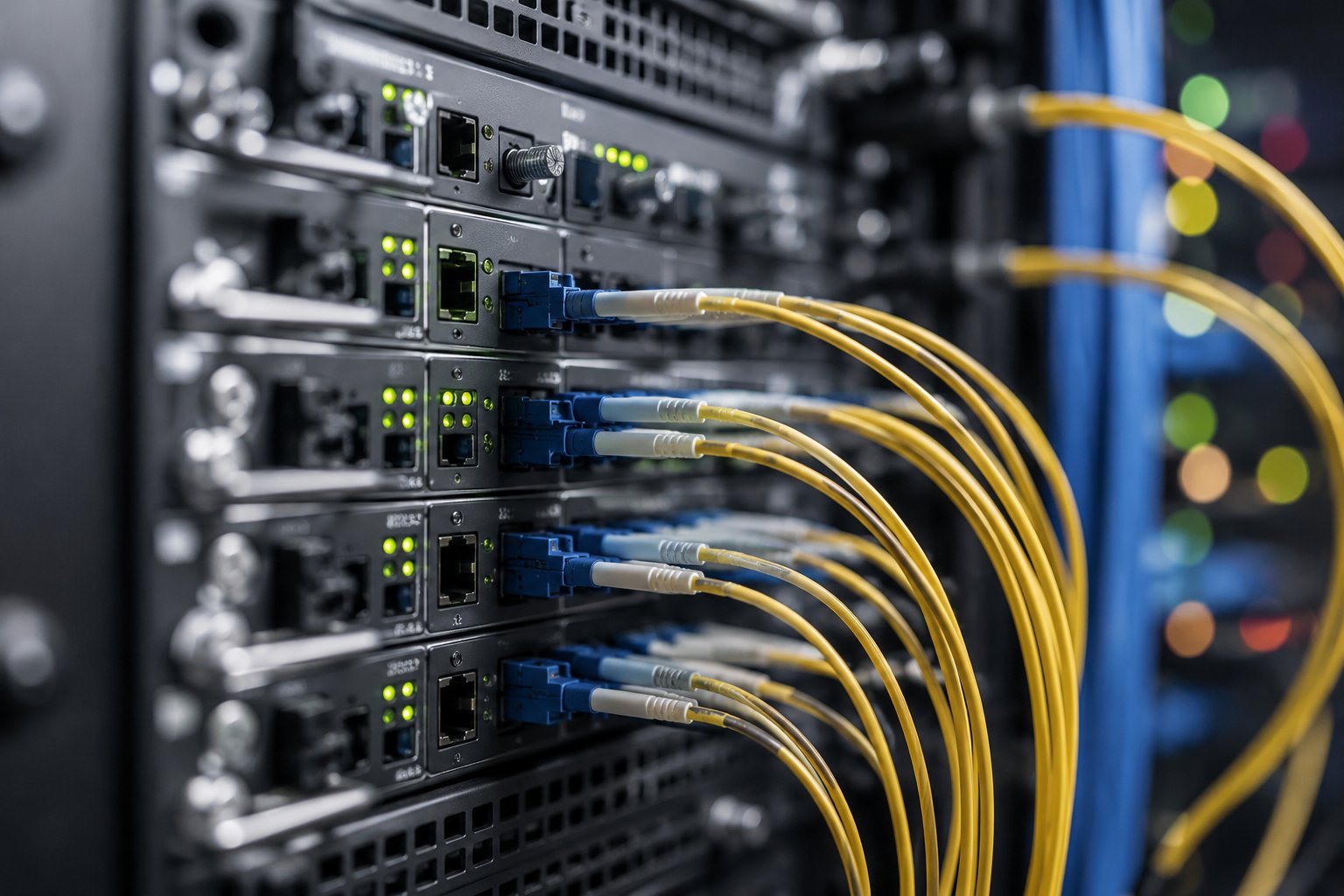
If you already own a PBX, you don't need another phone platform.
SIP Trunking is the right product when you have an on-premise or cloud PBX in place and just need high-quality carrier service to terminate calls. It's not for buyers looking for a full phone system — for that, see Phone Service.
You already own a PBX
3CX, FreePBX, Asterisk, Cisco UCM, Avaya, Sangoma, Yeastar — if it speaks SIP, we deliver service to it.
You need carrier service, not a platform
You're not shopping for features, queues, or a mobile app. You need clean dial tone with low per-minute rates and reliable termination.
You want per-channel pricing
Pay for the concurrent capacity you actually use — not per-user, not per-extension. Channels scale up and down as your business does.
Per-channel. Per-minute. Published rates.
One channel = one concurrent call. A team that handles up to 20 calls at the same time needs 20 channels. Inbound and outbound minutes are billed separately at the rates below.
Carrier service for your existing PBX.
Direct carrier contracts. PBX-grade support. No developer portal required.
Each channel supports one concurrent call.
| Component | Rate |
|---|---|
| Per channel (concurrent capacity) | $15/month |
| Outbound minutes (US/CA) | $0.015/min |
| Inbound minutes (US/CA) | $0.005/min |
| DIDs (additional phone numbers) | $10/each per month |
| International outbound | Metered by country |
| E911 service | Included on all channels |
Volume pricing available for 50+ channels or sustained high-minute customers. Contact us for a quote on channel bundles.
Works with the PBX you already deployed.
If your PBX speaks SIP — and almost every modern PBX does — we deliver service to it. The platforms below are the ones we configure most often. If yours isn't listed, it almost certainly works too.
Don't see your PBX? If it's SIP-compatible, we support it. Tell us during onboarding and we'll handle configuration.
Everything a serious telecom buyer expects.
The features below ship with every channel — not as paid add-ons. If you need something specific for a regulated industry or a custom routing requirement, it's part of the conversation.
E911 service included
Native emergency calling on every channel. Address registration handled at provisioning, not as a paid add-on.
Caller ID & CNAM
Outbound caller ID and CNAM submission. Your customers see your business name when you call, not "Wireless Caller."
Fraud monitoring
Anomaly detection on outbound traffic. International destinations can be locked by default and opened on request.
Failover routing
If your primary PBX goes offline, calls route to a backup destination you configure — another PBX, a cell phone, voicemail.
BYOC compatible
Bring your own carrier if you operate Teams Direct Routing or a hybrid stack. We provide the trunk side; your team or integrator handles the SBC configuration on yours.
Number porting
Bring your existing business numbers. Port-in and port-out are both billed at $15 per number — the same rate published on our pricing page. We don't hold numbers hostage on exit.
Your PBX. The internet. Our SIP endpoint. The PSTN.
Calls leave your PBX as SIP, traverse the public internet to our SIP endpoint, and we hand them off to the public phone network. Inbound works the same way in reverse. No proprietary protocol, no lock-in.
Setup typically takes a few business days. Most of that is number porting; channel provisioning is the fast part.
Straightforward by design.
- SIP Trunking is not a phone system: If you need extensions, voicemail, IVR, mobile apps, or call recording, you need Phone Service instead — those live in your PBX, not in our trunks.
- You're responsible for your PBX: We deliver service to it. Configuration of your PBX, SBC, or firewall is yours unless you contract us for managed configuration during onboarding.
- QoS depends on your network: Voice quality on SIP trunks depends on your internet connection, your LAN, and your firewall configuration. We help diagnose; we don't control your network.
- Number porting takes real time: Most ports complete in 5-15 business days. We won't promise next-day porting because we don't control losing carriers.
- What we don't promise: We don't promise zero downtime. We promise direct carrier contracts, transparent failover routing, and honest status when something goes wrong.
- E911 compliance is your responsibility: You must register and keep current the physical service address for every DID. 911 calls placed from unauthorized numbers, or from a line whose registered address does not match the actual calling location, incur a non-refundable $150 fee per call to cover dispatch correction and regulatory cost. SIP Trunking customers are especially exposed here because trunks often span multiple physical sites — provision E911 for each location and update it whenever numbers move.
Ready to put dial tone on your PBX?
Tell us how many channels you need, what PBX you're running, and any numbers you'd like to port. We'll quote it, configure it, and walk through cutover with your team.
Common Questions About SIP Trunking
Honest answers about pricing, ports, BYOC, and what we configure versus what you configure.
How much does SIP trunking cost per channel?
$15 per channel per month. Outbound calling to US and Canada is $0.015 per minute. Inbound calling from US and Canada is $0.005 per minute. Additional DIDs (phone numbers) are $10 per number per month. International calling is metered by country at published rates.
Will you configure my SBC or PBX?
No. SIP Trunking is BYOC — bring your own carrier. We provide the trunk side: registration credentials, IP authentication, routing rules on our switch. Your team or your integrator configures your Session Border Controller (SBC), PBX, or other voice equipment on your side. We will help with troubleshooting once both sides are configured, but the initial SBC/PBX setup is your responsibility.
What does it cost to port my existing numbers to your SIP trunks?
Number porting is $15 per number, both directions. The same applies whether you are moving numbers to us or away from us later.
Do you support international SIP trunking?
We sell SIP trunks to businesses located in the US and Canada, with a US service address registered for E911, and every new trunk goes through an identity review. International calling is off by default and can be enabled by request after review, metered by destination country. We don't sell wholesale termination or carry traffic for carriers or call centers outside North America.
What happens with E911 on multi-site SIP trunks?
Every SIP trunk endpoint must have a registered dispatchable location that matches the actual physical location of the calling device when 911 is dialed. This is a Ray Baum's Act requirement. For multi-site deployments, your team is responsible for keeping endpoint locations accurate as devices move between sites. Mismatch between registered location and actual location at the moment of a 911 call triggers a $150 non-refundable E911 misdial fee.
What authentication methods do you support?
We authenticate trunks by public static IP: you give us your SBC's public IP and we allowlist it on our switch. Username and password registration is not offered on new trunks.
How quickly can SIP trunks be provisioned?
Once we have your account set up, trunks can typically be provisioned and live the same business day. Porting existing numbers takes longer — 5 to 10 business days depending on the losing carrier — but new numbers and trunk capacity are fast.
Can I burst over my channel count during peak periods?
Channels are concurrent call paths. If you have 10 channels provisioned, you can have 10 simultaneous calls. We do not currently offer auto-burst above provisioned channel count. If your peak hours regularly exceed your channel count, the right path is to provision more channels. Channels can be added quickly when your business needs change.